
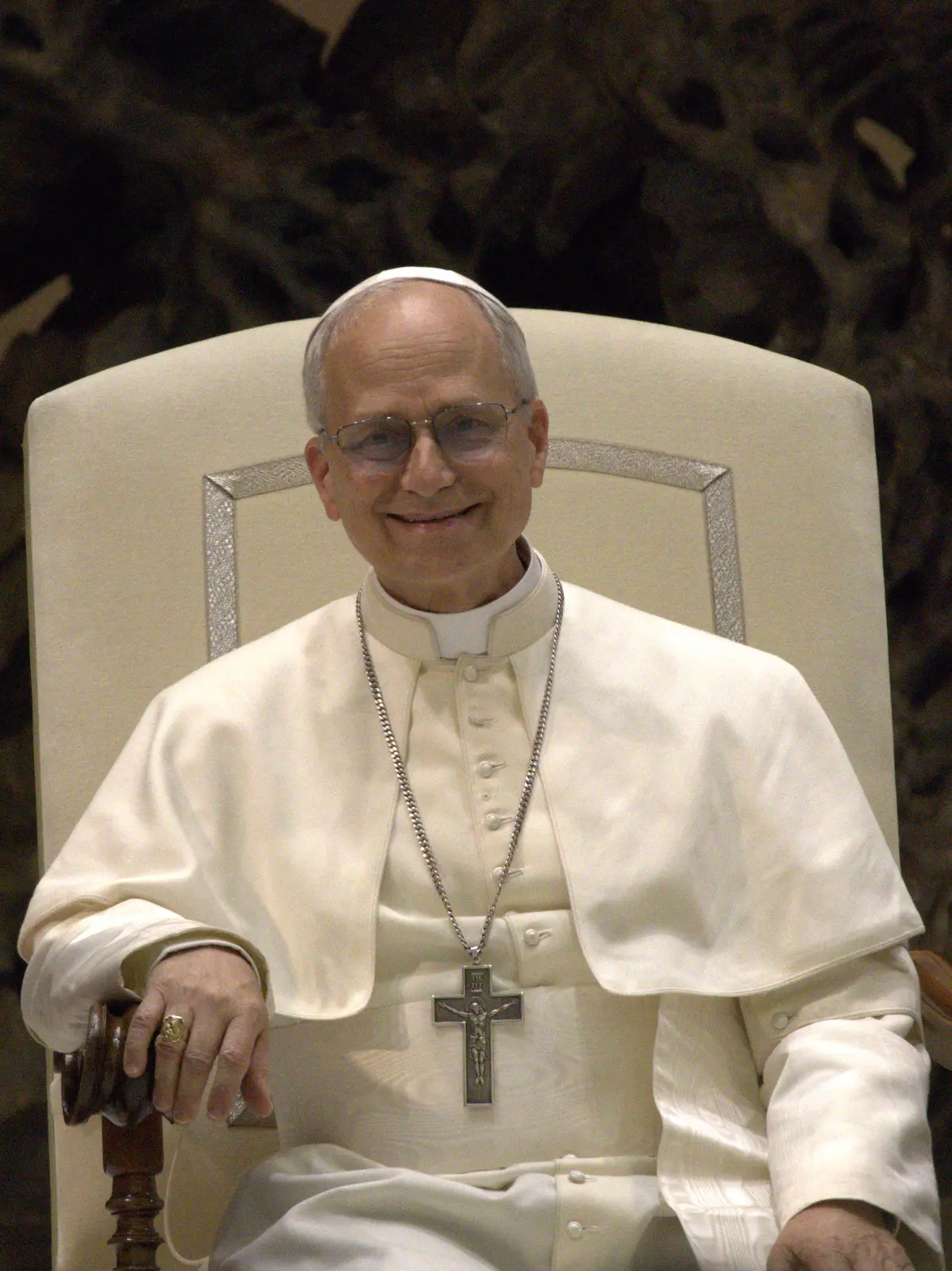
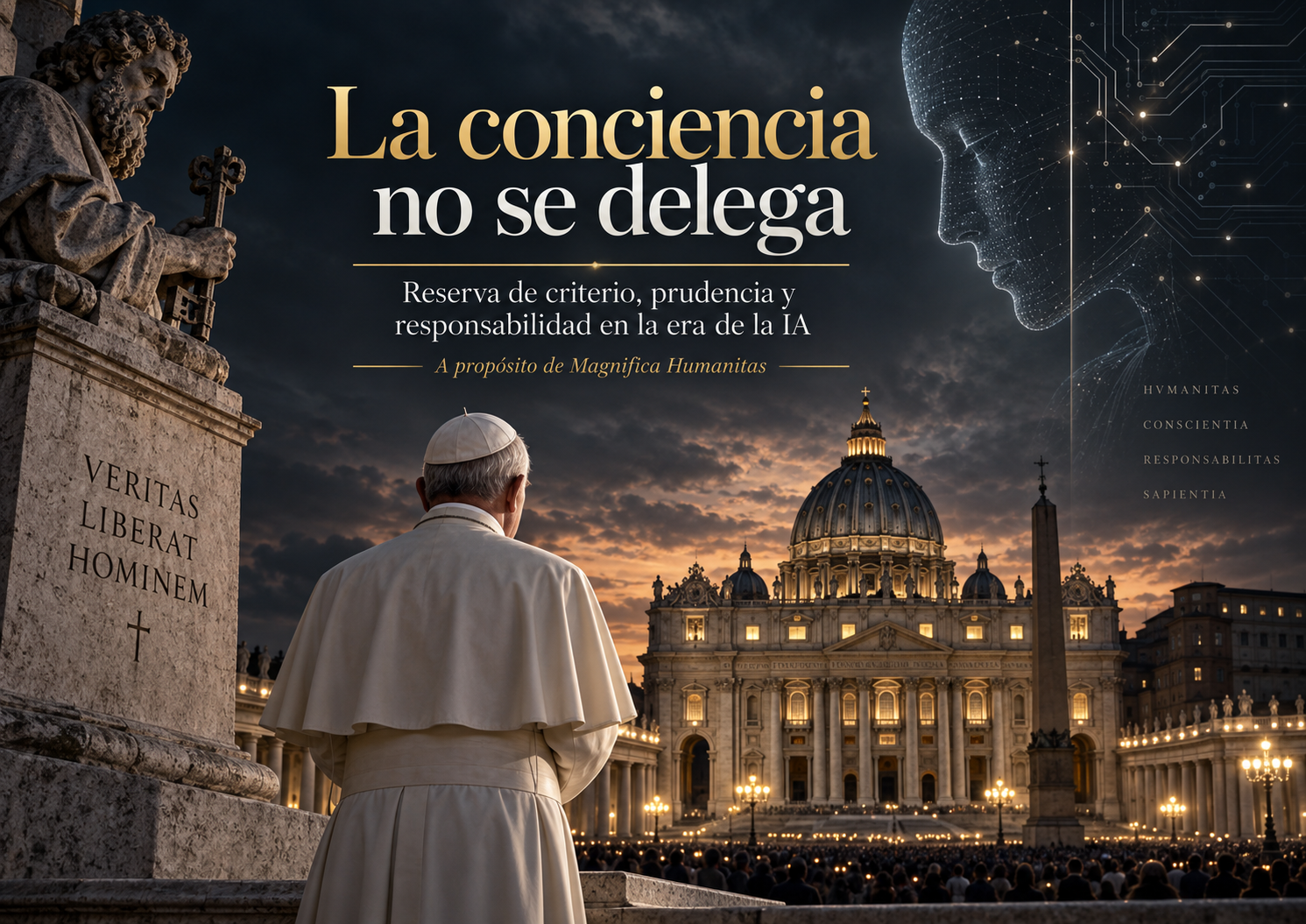
Pope Leo XIV’s first encyclical, Magnifica Humanitas, raises a question that extends well beyond religion: which part of human decision-making may be automated, and which part should never be handed over to a machine?
Artificial intelligence can compare alternatives, anticipate consequences, detect patterns and optimize resources with capabilities that already surpass human performance in specific tasks. Yet instrumental superiority does not confer moral authority. A solution may be technically optimal while remaining unjust, disproportionate, inhumane or simply undignified.
That is the decisive boundary: conscience is not a computational function, and responsibility cannot be outsourced to a system.
Efficiency answers how, not why
The most common error is to confuse an extraordinary ability to select means with the legitimacy to establish ends. A model can identify the decision that cuts the most cost, accelerates a process or maximizes a probability. It cannot determine, by itself, what human cost we are entitled to impose in order to achieve it.
The optimum is not always moral. The efficient is not always ethical. The profitable is not always just. And the option that produces the best aggregate result may demand an unacceptable sacrifice from a particular person.
This is not an argument against optimization. It is an argument for putting optimization in its proper place. Efficiency is important, but subordinate: it compares means after the organization has defined the limits it will not cross.
AI can optimize a decision. Only a person can answer for it morally.
A machine does not know what is at stake
Magnifica Humanitas insists on an essential distinction. Artificial systems process data and can imitate language, analysis and even empathy, but they possess no embodied experience, relationships, pain, hope or moral conscience. They do not know from within the reality about which they decide.
This is not a semantic dispute over whether a machine “thinks.” It has operational consequences. What cannot experience loss cannot assume it. What cannot be guilty cannot be responsible. And what cannot answer for harm should not hold final authority over an irreversible decision.
Responsibility belongs to the person and institution that designs, authorizes, uses or accepts the output. An algorithm may enter the causal chain; it cannot close the moral one.
The fiction of the human in the loop
Many organizations claim to retain human control because a person formally appears somewhere in the process. That presence may be merely decorative.
If the reviewer lacks time, information, competence or authority to contradict the system, there is no meaningful oversight. There is only a human signature at the end of an automated decision.
The problem becomes more serious when a model produces plausible, extensive and persuasive results. The human may end up certifying a conclusion they can no longer reconstruct. The organization then retains the appearance of responsibility while losing the capacity to exercise it.
Real human control requires four conditions: sufficient understanding, access to relevant evidence, time proportionate to the risk and actual power to stop or change the decision.
Prudence is not fear of progress
Prudence is often mistaken for slowness, conservatism or resistance. Properly understood, it is the ability to act well under uncertainty—to distinguish what may be delegated, what must be verified and what requires a personal decision.
Leo XIV does not argue for technological retreat. He calls for rigorous evaluation, identifiable responsibility and, when institutions cannot yet govern the consequences, the possibility of slowing adoption. Not because progress is wrong, but because acceleration without direction is another form of abdication.
Good governance is not a human veto over every operation. It is an architecture in which control rises with irreversibility, opacity and potential harm.
Some choices derive their value precisely from restraint
Optimization logic tends to treat every constraint as an inefficiency. Yet a humane society is recognized by the limits it chooses to respect even when doing so costs more.
Keeping a vulnerable person inside a system may be less efficient than excluding them. Preserving employment through a transition may cost more than immediate automation. Giving a second chance may worsen a short-term metric. Taking time to listen, accompany or care may maximize no indicator at all.
This is not an invitation to turn compassion into an excuse for incompetence or to embrace a naïve idealism unable to face real constraints. Resources, productivity and economic sustainability matter. Precisely because resources are limited, however, deciding what may be sacrificed and what must be protected is a moral act, not a mathematical operation.
Charity, mercy and dignity do not replace management. They define what management must not destroy.
From the Judgment Reserve to a Conscience Reserve
Earlier articles proposed the Judgment Reserve: an organization’s distributed ability to know when an apparently correct answer deserves trust, when it requires verification and who is competent to perform it.
Magnifica Humanitas requires us to broaden that concept. Preserving an epistemic reserve capable of detecting error is not enough. We also need a moral reserve capable of recognizing decisions that, although instrumentally correct, should not be carried out.
An organization needs people who can say “this is false,” but also people authorized to say “this may work, and we still should not do it.”
That ability erodes when every incentive rewards speed, cost and output; when disagreement is treated as friction; or when decisions are fragmented among vendors, models, departments and committees until no one retains full responsibility for the result.
Subsidiarity must also be cognitive
The encyclical recovers the principle of subsidiarity: higher levels should not absorb decisions that can be responsibly taken by the people and communities closest to their consequences.
Applied to AI, this suggests cognitive subsidiarity. Technology should strengthen the capacity of those who understand the context, not hollow it out. It should bring better information to the accountable person, not silently replace that person’s judgment. And it should allow the affected individual to remain visible as a subject, not reduced to a record, score or statistical category.
Centralizing computation may be efficient. Centralizing interpretation, decision and responsibility as well may be profoundly dangerous.
A governance framework for decisions with human consequences
Before automating a consequential decision, leadership should require concrete answers:
- Purpose: what good are we pursuing, and who legitimized that objective?
- Limits: what outcome would we reject even if it improved efficiency?
- Affected people: who bears the cost of error and can challenge the decision?
- Competence: does the supervisor understand the system and context well enough to contradict it?
- Authority: can that person stop the process without being penalized?
- Traceability: can we reconstruct the data, rules, models and people involved?
- Responsibility: which identifiable person answers if the outcome causes harm?
- Remedy: is there a rapid and human mechanism to correct the damage?
If the organization cannot answer, its main problem is not insufficient artificial intelligence. It is insufficient governance.
The real value of remaining human
The strongest contribution of Magnifica Humanitas is not the warning that machines may be wrong. We already know that. It is the reminder that even a machine that was almost always right would still be unable to decide what it means to act well.
AI can help us see more, compare better and anticipate consequences. We should use that power. But a civilization is defined not only by the quality of its means, but by the ends it chooses, the limits it respects and the way it treats those who improve no metric.
Preserving human decision-making does not mean reserving the final click. It means preserving the competence, freedom and courage to contradict the optimal option when it ceases to be just.
Conscience cannot be delegated because responsibility cannot be delegated either.
Sources and interpretation note
- Leo XIV: Magnifica Humanitas, on safeguarding the human person in the time of artificial intelligence.
- Dicastery for Promoting Integral Human Development: official summary and resources.
- Photograph of Leo XIV: Edgar Beltrán / The Pillar, CC BY-SA 4.0.
.png)
The Conscience Reserve and cognitive subsidiarity are the author’s conceptual developments from the encyclical and the earlier Judgment Reserve framework. The article does not attribute to the papal text business positions it does not expressly formulate.
© 2026 Javier F. Pérez Bernabé. All rights reserved. Published by Quórum 12.
ONLINE SUBSCRIPTION
Receive every new analysis and invitation to open events.
This is a separate public category: it does not confer membership, admission or access to the private portal.